PokerStars: Texas Holdem Games
- 2.6
- Rating
- 10.00M
- Installs
- Free
- Price

 Analysis by App-foxy
I approached PokerStars: Texas Holdem Games expecting a familiar mobile poker experience rather than a heavily decorated casino showcase. That turned out to be the right way to view it. This is a free card game from TSG Platforms Ireland Limited built around Texas Hold’em and Omaha, with cash games and tournaments as its main forms of play. Its basic appeal is easy to understand: sit down for a short session, make decisions hand by hand, and return later when you want another table.
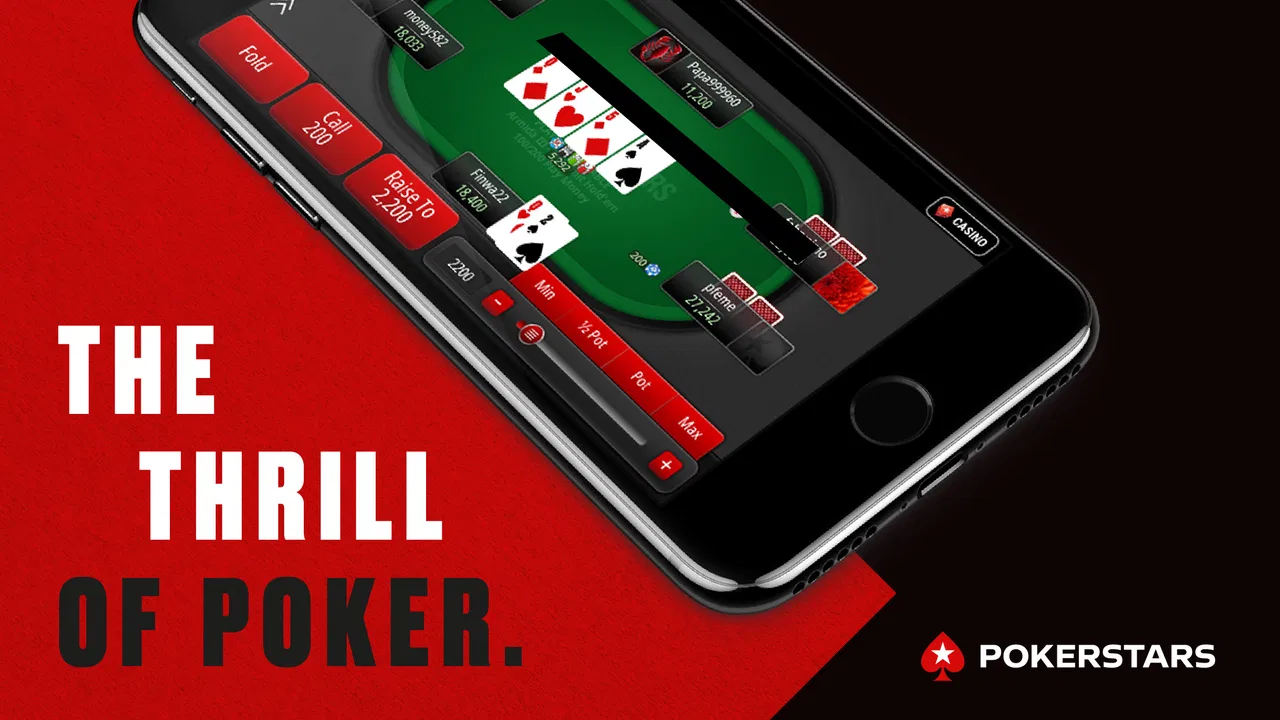
The first impression is practical rather than theatrical. The visual presentation keeps attention on the table, the cards, the chips, and the changing action. That restraint suits poker because the important drama comes from uncertainty, timing, and the choice to continue or fold. I found the game most enjoyable when I treated it as a focused decision-making break instead of expecting a complete casino simulation with a rich fictional setting.
There is also an important expectation to set before installing it. The game is free to download, but it includes in-app purchases ranging from $0.99 to $399.99 per item. The store summary highlights a recurring supply of free chips, which makes casual play possible without immediately paying. Even so, anyone who is uncomfortable with virtual-currency spending should decide on a firm personal limit before exploring the tables.
You May Also Like

 Blood Strike: 2.5 Anniversary
Blood Strike’s Loadouts Turn Every Drop Into a Tactical Gamble
A close look at Blood Strike’s custom loadouts: how fast access to signature weapons reshapes its battle royale rhythm, rewards preparation, and narrows the gap between fights.

 Pandora - Music & Podcasts
Pandora’s Music Is Easy to Start, but Harder to Recover
Pandora’s strength is its low-effort path from a seed to a station. Its weak spot is how much confidence it asks you to place in connection, setup, and quiet recovery.

 8 Ball Pool
 Is Built on Rivalries, Rematches, and Routine
A close look at the rivalries, rematches, shared routines, and unanswered safety questions that turn a quick pool match into a persistent mobile community.

 Samsung Music
’s Quiet Strength Is Playing What You Already Own
Its reach comes less from spectacle than from dependable access to a personal library. That simplicity is both the app’s strongest retention engine and its ceiling.

 AccuWeather: Weather Radar
AccuWeather Review: A Quick, Clear Forecast for Everyday Decisions
For everyday plans, the best forecast is the one you can understand quickly. AccuWeather makes rain timing, radar, and local conditions easy to act on, with a few trade-offs.

 Hill Climb Racing
Why Hill Climb Racing Still Turns Crashes Into One More Run
A tiny car, a bumpy hill and one more upgrade: Hill Climb Racing keeps resurfacing because its simple chaos makes every near-miss feel personal.
More From Our News Desk
View All News


How the table creates its own language
Poker does not need a large fantasy world to establish a mood. Here, the setting is the table itself: cards arrive, bets develop, and every player’s behavior becomes part of the story. The art direction works best when it stays readable. A poker app can easily bury the useful information beneath animated effects, oversized menus, or decorative casino imagery. This experience is more convincing when it lets the small details of the hand provide the drama.
I like that the game’s identity comes from recognizable poker situations rather than a forced narrative. A cautious player, an unexpectedly large bet, or a difficult decision on the final community card can create more tension than a background illustration. That makes the presentation feel coherent with the mechanics. The table is not merely a place where buttons appear; it is the visual frame for reading risk.
The choice between Texas Hold’em and Omaha also changes the way the game feels. Hold’em is easier to approach because the basic structure is familiar to most new players. Omaha asks for more careful attention to possible combinations and the cards that can realistically complete a hand. I would start with Hold’em if I were introducing someone to the app, then move to Omaha once the pace of betting and the meaning of position felt comfortable.
That distinction matters for choosing a table. A newcomer may think that a larger number of available cards automatically means more opportunities to win, but Omaha can also produce more complicated boards and stronger competing hands. My practical advice is to avoid switching formats simply because one session went badly. Learn the rhythm of one variant first, and only then use the other as a deliberate change of pace.
The Teen content rating is also worth considering in context. Poker involves simulated wagering and competitive play, so it is not presented as a children’s card game. I would not hand it to a young player without discussing the difference between free chips and real spending. The age label does not replace sensible supervision or responsible habits.
Visual clarity matters more than decoration
When I play a poker app, I want to identify the current action quickly. The visual hierarchy should make it obvious whose turn it is, what the available choices are, and how the hand has developed. PokerStars benefits when the table remains the center of attention. That helps me think about the board instead of hunting through the interface.
There is a trade-off, though. A clean table can feel less lively than a game filled with celebratory effects, avatars, and constant rewards. Players who want a colorful social casino atmosphere may find the presentation restrained. For me, that is acceptable because visual noise is especially distracting during a close hand, but it means the game’s mood depends heavily on the quality of the actual decisions.
One useful habit is to treat the interface as a checklist. Before acting, I look at the community cards, the current bet, the remaining chips, and the likely range of hands suggested by the action. This is more reliable than reacting to a flashy animation or a recent win. The game is at its best when its presentation encourages that kind of pause.
Sound, pacing, and the emotional shape of a session
Sound in a poker game should support concentration rather than compete with it. The playable mood here comes from the repeated cycle of dealing, waiting, betting, and revealing. Even without a dramatic soundtrack carrying the experience, that cycle can create a steady sense of anticipation. I prefer a soundscape that marks important moments lightly, because poker becomes tiring when every ordinary action is treated like a jackpot.
The pacing is similarly important. A hand can be exciting, but the overall session is made from many hands, including folds and uneventful rounds. The game needs to make those quiet moments tolerable. I found that the strongest rhythm comes from using short visits for focused play: a few hands while waiting, or a planned session when I have enough time to concentrate. It is less satisfying when I open it without a clear limit and drift through repeated rounds.
That leads to one of the app’s more practical strengths. The free-chip structure gives casual players a reason to return without requiring every visit to begin with a purchase. It supports a stop-and-start routine: play when the balance allows it, leave when attention drops, and come back later. The drawback is that any recurring reward can encourage habitual checking. I would turn that system into a schedule rather than a command, especially if notifications or anticipation start controlling when I play.
Pacing also changes between cash games and tournaments. Cash play is easier to fit around daily life because the focus is on the current table and the decisions immediately in front of me. Tournaments create a stronger sense of progression and consequence, but they can demand a longer uninterrupted stretch. If I only have a few spare minutes, I would choose a format that lets me leave comfortably rather than beginning a session I cannot finish with a clear head.
For a realistic everyday use case, imagine playing during a commute break or while waiting for an appointment. I would use that time to review hands and practice patience, not to chase a lost balance. If the connection, attention span, or available time is uncertain, a short casual session is the sensible choice. Poker rewards concentration, and divided attention can turn a manageable game into a string of impulsive calls.
Why the rhythm can become demanding
The game’s repetition is both its comfort and its limitation. Players who enjoy the familiar loop of cards and decisions may find it relaxing. Others may feel that the app offers too little variety outside the poker table. Compared with solitaire, it is less private and less predictable. Compared with a traditional offline poker game, it offers more immediate opponents and table activity, but it also introduces virtual chips, account progression, and the temptation to keep playing.
Compared with a dedicated poker client aimed at serious study, this is easier to pick up for casual sessions but may not satisfy someone looking primarily for deep analysis tools or a quiet training environment. I would choose it for accessible play across familiar formats, not as my only resource for improving technically. A physical deck and a few friends remain better when the goal is conversation, custom rules, and complete control over the pace.
The sound and visual mood cannot solve poor discipline. If I am tired, annoyed after a loss, or trying to multitask, the correct move is to stop. The app can make the next hand easy to reach, but it cannot make a distracted decision good. That is a central trade-off of mobile poker: convenience increases access, while access can reduce the natural pause that would happen around a real table.
Where the mechanics earn their place
The core mechanics are familiar, which is a benefit. I do not need to learn an elaborate control system before playing. The real learning curve comes from reading the board, judging risk, and understanding when a strong-looking hand is not strong enough for the action. That makes the game approachable without making every decision simple.
The most useful way to play is to separate decisions into stages. First, I consider the cards and position. Then I watch how the table responds. Finally, I compare the possible reward with the amount I am being asked to commit. This sounds basic, but mobile games encourage quick taps, and the extra second spent checking the situation often prevents a careless call.
One non-obvious advantage of moving between cash games and tournaments is that each format exposes a different weakness. Cash play can reveal whether I am making too many speculative decisions without a clear reason. Tournament play can show whether I understand changing pressure as the session develops. I would use the formats as separate practice environments instead of measuring them by the same standard.
Omaha provides another useful test. The larger number of hole cards can make a hand look more promising than it really is, particularly when several possible combinations compete on a coordinated board. My tip is to focus on the best realistic completed hand, not on the number of partial possibilities visible in front of me. That small change in thinking helps prevent overconfidence.
Another practical workflow is to set the purpose of each visit before sitting down. I might play a few hands to practice folding marginal cards, or I might join a tournament only when I can give it proper attention. This turns the app from an endless stream into a controlled activity. It also makes the free-chip system easier to handle because I am less likely to spend simply to extend an unfocused session.
The game’s scale suggests a broad audience. It has passed ten million installs, and its average rating is 2.8 from around 337 thousand ratings, with roughly 11 thousand written reviews. Those figures point to a large, mixed player base rather than a niche tool designed only for experts. I read that as a reason to expect varied table habits and uneven experiences, not as a guarantee that every session will feel equally polished.
The current version is 3.90.0, and the game requires Android 8.0 or later. That makes device compatibility straightforward for many Android users, though anyone on an older phone or operating system should check before planning a session. The app has been available since May 22, 2012, so it is an established name rather than a newly launched experiment.
Spending, chips, and sensible boundaries
The free price is a genuine advantage for testing the experience. I can learn whether I enjoy the table flow before paying anything. The recurring free chips also make it possible to treat the app as a casual pastime, provided I accept that the free balance may shape how often I can play at a chosen level.
The important limitation is the presence of purchases from $0.99 to $399.99 for an item. That range is broad enough that I would not rely on impulse control alone. I would use device-level purchase protections, decide in advance whether I will spend, and never treat a loss as a reason to buy more chips. The game is much easier to recommend when it remains entertainment with a fixed budget.
Players should also understand what they are paying for emotionally. Purchasing virtual chips does not improve poker judgment, remove variance, or make a difficult table easier to read. It may extend access to play, but it can also make losses feel more immediate because money has entered the loop. For that reason, free play is not merely a trial mode; for many users, it is the healthiest long-term way to use the app.
I would skip this game if I wanted a completely offline card experience, a no-spending environment, or a slow game that can be paused without any social or competitive pressure. I would also avoid it if I tend to chase losses or play while distracted. A different solitaire title is better for quiet solo relaxation, while a physical deck is better for a controlled group evening.
Who will enjoy the atmosphere most
This is a good fit for someone who already understands the basics of poker and wants convenient access to Texas Hold’em or Omaha. It also works for a curious beginner who is willing to learn gradually, start with the simpler format, and treat early sessions as practice rather than proof of skill. The table-centered presentation supports that learning because the important information remains tied to the hand.
It is less suitable for someone seeking a story, a richly explored setting, or constant visual novelty. The atmosphere is created through uncertainty and rhythm, not through characters or a campaign. Players who need a strong narrative reason to continue may find the experience repetitive once the novelty of the first sessions fades.
I also think the game is better for deliberate short sessions than for automatic background play. The most satisfying moments come when I notice a pattern, resist a tempting hand, or make a decision based on the full board rather than emotion. Those moments require attention. If I am only tapping through hands, the game loses the very tension that makes poker interesting.
For beginners, I recommend learning the hand rankings outside the pressure of a competitive table, then using the app to practice recognizing them in real time. I would begin with low-pressure play, avoid spending while learning, and keep notes mentally about why I entered a hand. After that, trying Omaha can be useful, but only as a separate challenge rather than an escape from a difficult Hold’em session.
For experienced players, the attraction is convenience and variety rather than a revolutionary ruleset. The ability to move between two well-known poker formats and between cash games and tournaments gives the app enough flexibility for changing moods. Still, serious players may want another tool alongside it if they need structured study, detailed review, or a more controlled environment.
My final view of the playable mood
PokerStars: Texas Holdem Games succeeds when it keeps the atmosphere close to the real emotional language of poker: quiet observation, sudden pressure, and the relief of making a disciplined fold. Its art direction is most effective when it avoids distracting from the table. Its sound and pacing work best in short, attentive sessions. The mechanics remain familiar enough for newcomers while leaving room for meaningful differences between Hold’em, Omaha, cash games, and tournaments.
My main reservation is not the card play itself but the surrounding spending loop. Free access and recurring chips make the game easy to sample, yet the available purchases mean I would approach it with clear boundaries. The app is also not a substitute for every kind of card entertainment. It lacks the offline simplicity of a deck on a table and may feel too repetitive for players who need a broader world.
After weighing those points, I would recommend it to friends who want mobile poker with recognizable formats and a focused table experience. I would tell them to start for free, choose one format, play with a time limit, and treat every chip as a reason to practice patience rather than chase excitement. The best way to enjoy this game is to let the decisions create the drama, not the spending system.
FAQs for PokerStars: Texas Holdem Games
01What platforms is PokerStars: Texas Holdem Games available on?
PokerStars: Texas Holdem Games is available for both Android and iOS devices. You can download the app from the Google Play Store for Android or the Apple App Store for iOS. Ensure your device meets the minimum system requirements for optimal performance and gameplay experience.
02Is PokerStars: Texas Holdem Games free to play?
Yes, PokerStars: Texas Holdem Games is free to download and play. However, it offers in-app purchases that enhance the gaming experience. Players can purchase chips and other items, but these are optional and not necessary to enjoy the core features of the app.
03Can I play with friends in PokerStars: Texas Holdem Games?
Absolutely! PokerStars: Texas Holdem Games allows you to play with friends. You can create private tables and invite your friends to join you for a game. This feature makes it easy to enjoy poker with familiar faces, no matter where they are.
04Is it safe to play PokerStars: Texas Holdem Games?
PokerStars: Texas Holdem Games is developed by a reputable company with robust security measures in place. It uses encryption to protect your personal information and offers secure payment options for in-app purchases. Always ensure you download the app from official stores to avoid security risks.
05What are the main features of PokerStars: Texas Holdem Games?
PokerStars: Texas Holdem Games offers a variety of features including real-time multiplayer gameplay, tournaments, daily challenges, and customizable avatars. It also provides tutorials for beginners and a leaderboard to track your progress and compete with other players globally.
Pros
- Intuitive interface
- easy to navigate.
- Wide range of poker variations available.
- Frequent updates with new features.
- Engaging and competitive tournaments.
- Strong community and social features.
Cons
- Requires constant internet connection.
- In-app purchases can be expensive.
- Occasional bugs in the app.
- Heavy on battery usage during play.
- Some features locked behind paywall.

PokerStars: Texas Holdem Games
Gallery